Season by Season Hosta Care for the Denver Metro
Snow cover in the Denver metro is unreliable from October through March, and the ground spends much of that stretch bare, frozen, and dry. That is why the winter half of the year takes more attention here than the plant tags suggest, and why the calendar below is worth following rather than improvising. The hosta care guides elsewhere on the site cover siting, variety choice, and what to plant alongside them.
Spring: Emergence, Late Frost, and Dividing
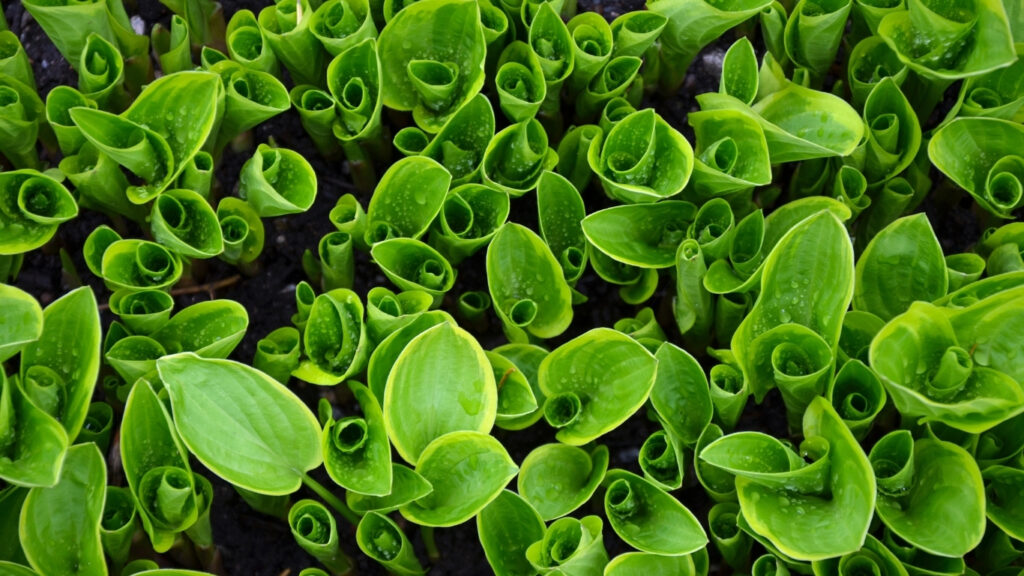
Hostas break ground once the soil warms, generally through April on the Front Range. The pointed shoots come up well ahead of the average last frost, which falls around May 15. A hard freeze on emerged shoots blackens the tips. The plant survives and pushes more growth, but that first flush of leaves can look rough for the rest of the season. If a freeze is forecast and the shoots are up, an overturned bucket or a layer of frost cloth overnight is enough.
Divide in spring, once the eyes have broken the surface and you can see what you are cutting. Lift the clump and separate it with a clean, sharp spade or knife, keeping as much root as possible on each piece. Early fall works too, but a spring division on the Front Range gets the whole season to root in before it faces a dry winter.
A balanced, slow release fertilizer as the leaves emerge is plenty, and heavy rates do more harm than good. A second round before flowering is optional. Stop feeding after the end of July, since late nitrogen pushes growth the plant cannot harden off in time.
Summer: Water, Mulch, Slugs, and Hail
Hostas want the equivalent of about an inch a week through July and August, and more than that if the bed gets sun, sits against a hot wall, or shares its root zone with a tree. Water deeply and less often instead of a little every day, and put the water on the soil rather than over the foliage.
Mulch goes down after the soil warms, in late spring or early summer. Two to four inches of shredded bark or shredded leaves holds moisture and steadies soil temperature. Keep it pulled back from the crown of the plant.
Slugs are less of a problem here than in the Midwest because the air is so dry, but an irrigated shade bed is a damp island in an otherwise dry yard and can support a population anyway. The sign is ragged holes chewed through the middle of the leaf blade. Wider spacing and watering in the morning rather than the evening both reduce it.
Hail does more damage in one afternoon than anything else in the summer. Early in the season, cut off the shredded leaves, water the plant, and let it push a new flush. From August on there is not enough season left for a full recovery, so the clump stays torn until spring. The damage is cosmetic, and the crown is fine.
Fall: Cutback, Cleanup, and When to Mulch
Cut the foliage back once it has yellowed and collapsed, and clear the debris around the plants while you are at it, because old leaves shelter slugs and carry disease into the following year. For a healthy plant, cutting back in fall or spring works equally well, though fall cleanup is the better call if slugs were an issue.
Where perennials went into fall already drought stressed and watering is restricted, cut them back only partially and let the plant self mulch through the winter.
Hold the winter mulch until soil temperatures have cooled, usually November at Front Range elevations. Mulching too early keeps the soil warm and delays dormancy. The purpose of that layer is not to keep the plant warm. It is to keep the soil temperature from swinging.
Water the bed thoroughly before the ground freezes. A hosta that enters a Colorado winter with dry soil around its crown is the one most likely to be missing in April.
Winter: Watering on Warm Days and Frost Heave
Water when air and soil temperatures are above 40 degrees and there is no snow cover, apply it at midday so it soaks in before the overnight freeze, and plan on once or twice a month from October through March. If real precipitation arrives, skip that month.
Beds along a south or west wall need it most. The low angle of the winter sun combined with heat reflected off masonry dries those spots faster than anywhere else in the yard, and windy exposures dry faster still.
A pot freezes solid from every side in a way the ground never does. Sink the pot into a bed, move it against the north side of the house, or put it in an unheated garage until spring.
Why Front Range Winters Are Hard on Shallow Roots
Where snow lies all winter it insulates, soil temperature stays reasonably constant, and roots stay where they were planted. Between October and March the Front Range frequently has none, along with warm sunny afternoons followed by hard overnight freezes.
Freezing and thawing heaves the soil and opens cracks that expose roots to cold and drying. Hosta roots are fleshy and shallow, sitting right where the cracking happens. Mulch and winter watering together are what prevent it, which is why both keep coming up on this page.
A Month by Month Rhythm
- March. Water if the month is dry and the ground is bare. Pull excess mulch back off the crowns as things warm up.
- April. Shoots emerge. Watch the forecast and cover them if a hard freeze is coming. Divide now if you are dividing.
- May. First light feeding as the leaves unfurl. Average last frost lands mid month.
- June. Mulch once the soil has warmed. Settle into the weekly watering rhythm.
- July. Water, watch for hail, and stop fertilizing at the end of the month.
- August. Peak water demand. The fragrant cultivars bloom.
- September. Ease off the water as nights cool. Leave green foliage alone.
- October. Foliage yellows and collapses. Cut back and clean up. Average first frost is around the 15th. Water the bed well before the ground freezes.
- November. Apply winter mulch once soil temperatures have dropped.
- December through February. Water once or twice a month on days above 40 degrees with no snow on the ground.
Summer watering is the part everyone remembers. Winter watering, on a warm dry afternoon in January when there is nothing visible in the bed at all, is the part that gets skipped, and it is the usual reason a bed comes back thin in April.